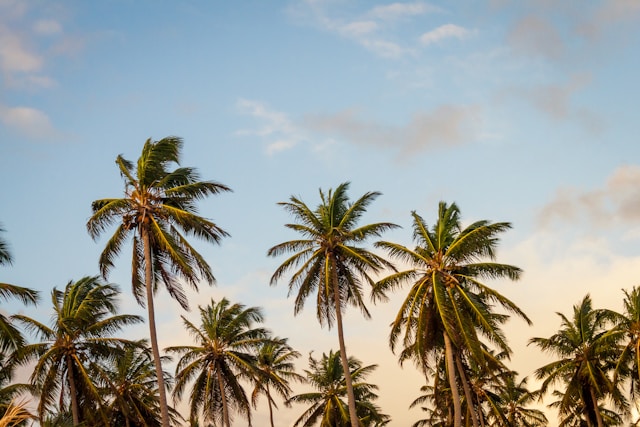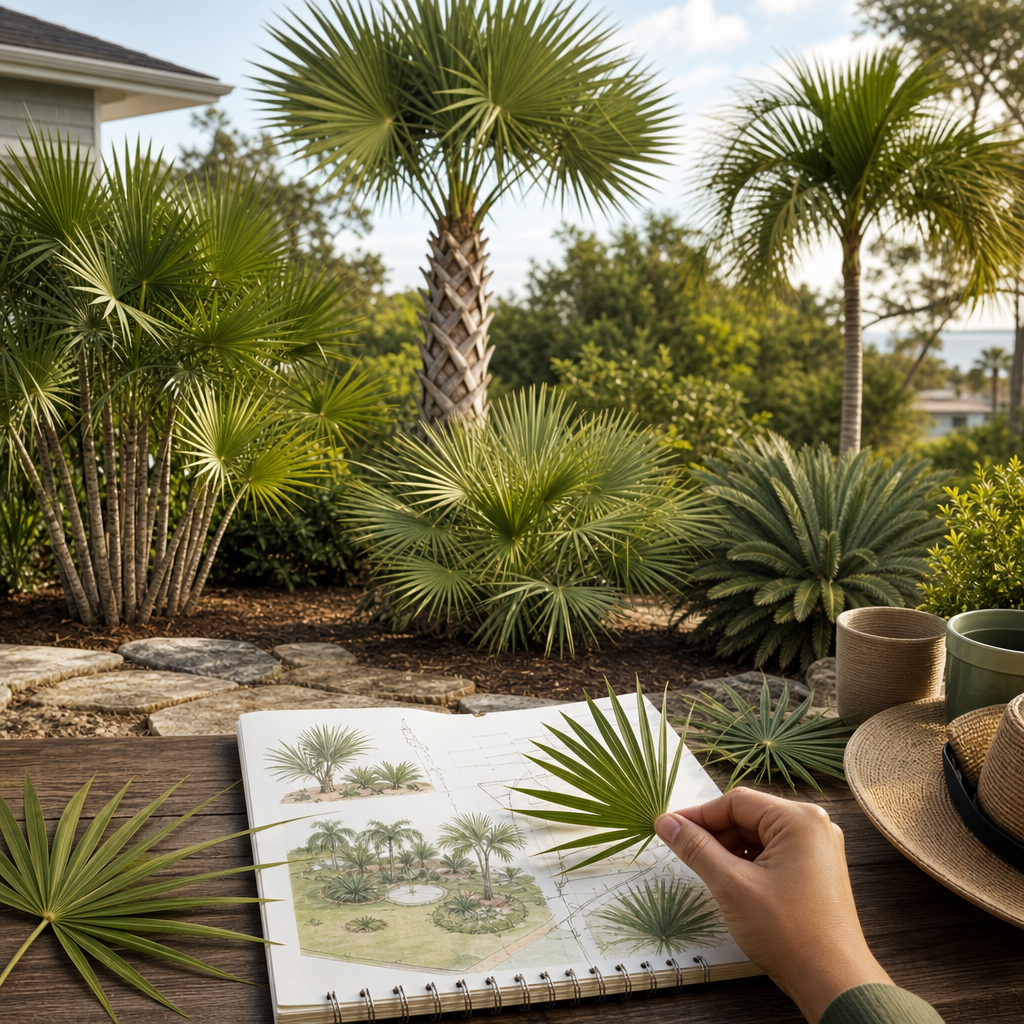
Florida Native Palms wählen: So passt die Auswahl zum Standort
Florida native palms can suit many landscapes, but each species has different needs for light, moisture, space and salt exposure. Choosing native palms successfully means reading the site first, then matching its conditions with a mature growth habit.
Key Points
- Florida has roughly a dozen native palm species, each suited to different light, moisture and salt conditions.
- Wet ground favours paurotis palm and needle palm, while dry sandy sites suit saw palmetto.
- Florida thatch palm is listed as endangered by the state of Florida, so only nursery-grown, legally sourced material should be planted.
- Mature size, not container size, should drive every placement decision — a solitary palm needs vertical clearance, a clumping palm needs horizontal room.
Check Sun, Drainage and Salt Exposure First
Begin by observing the planting area during different parts of the day. Full sun, filtered light beneath existing trees and deep shade can produce very different results.
Sun affects compact growth, trunk development and the final appearance of the palm. Record the conditions rather than relying on one quick visit. A site that looks bright in the morning may sit in shade by afternoon.
Next, inspect drainage after heavy rain. Standing water, a high water table or compacted fill suggests conditions suited to moisture-tolerant species. Paurotis palm works well in moist or seasonally wet ground, while saw palmetto fits dry, sandy sites.
Coastal exposure requires closer analysis. Salt spray, salt-laden wind and direct seawater contact create different levels of stress. Salt tolerance remains relative, even among suitable coastal plants.
Salty irrigation water can also cause leaf burn or gradual decline. Before planting, identify the water source and note whether storm surge could reach the root zone. These observations narrow the choice more reliably than appearance alone.
How Palms Fit Different Yard Sizes
Container size gives only a temporary impression. Mature height, crown spread and trunk formation should guide every planting decision. Cabbage palm, Sabal palmetto, can develop into a large canopy tree, so it needs sufficient vertical clearance.
Saw palmetto, Serenoa repens, stays comparatively low and broad. Its clumping habit makes it useful as a drought-tolerant ground-layer plant rather than a tall specimen. Allow horizontal room for its spread.
Paurotis palm, Acoelorrhaphe wrightii, forms multiple trunks and can create a dense screen. That feature suits a boundary, yet it may crowd paths, walls or utility access. Plan for its mature spread before ordering.
A solitary palm needs vertical clearance and an unobstructed crown. A clumping species needs more horizontal space and may require periodic management. Confirm mature dimensions, expected growth rate and natural leaf retention.
For nursery-grown material, Florida native palms should come with clear details about current height, trunk height and the number of trunks supplied. A recent photograph or specification sheet can reveal the actual form.
Florida-Friendly Landscaping guidance also recommends grouping plants with similar water needs. That approach simplifies irrigation and helps prevent unsuitable planting combinations.
Select Species for Wet Ground, Dry Sand or Coasts
Match the palm to the soil before considering colour or form. Cabbage palm tolerates a broad range of conditions, including full sun, partial shade, moderately dry sites and periodically wet soils.
Wet ground still requires careful assessment. Check flood duration, water movement and whether the soil remains oxygenated around the roots. Persistent saturation or a high water table cannot always be corrected with mulch. A different species or planting location may be necessary.
Paurotis palm is a strong candidate for moist or seasonally wet sites. Needle palm also belongs among species considered for challenging moisture conditions. The final choice depends on the site’s water behaviour.
Dry, sandy ground favours saw palmetto because its natural habitat includes sandy uplands and coastal areas. Establishment watering remains necessary after planting, even when the mature palm tolerates drought.
Warm south Florida gardens with well-drained coastal soils may suit Florida thatch palm, Thrinax radiata. This species is listed as endangered by the Florida Department of Agriculture and Consumer Services, so it should be sourced only from licensed nurseries rather than collected from the wild.
Windbreaks and correct irrigation can reduce coastal stress, but they cannot eliminate salt damage. Protect palms from direct ocean exposure whenever the layout allows.
Ask These Questions Before Ordering
Before placing an order, request the botanical name, Florida grade, container or root-ball size, current height and measured trunk height. Confirm the mature height, crown spread, water needs, cold sensitivity and salt tolerance. Ask whether the palm was nursery-grown, legally sourced and acclimated to Florida conditions. Inspect the plant for trunk damage, root problems, nutrient deficiencies and pest symptoms. Delivery instructions matter because rough handling can damage the growing point. Choose a palm only after comparing its mature form with nearby paths, walls, utilities and existing trees.